
Best Reacher Grabber Tools for Seniors: Practical Picks for Safer Everyday Tasks
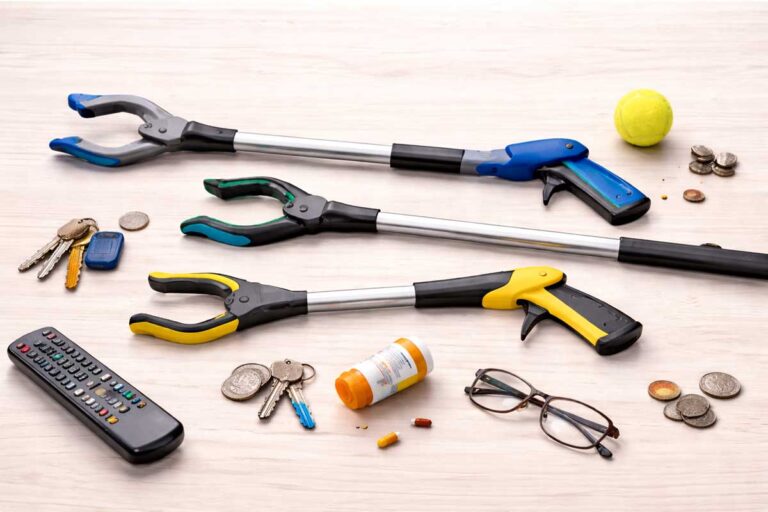
A reacher grabber tool can seem like a small convenience until bending, stretching, or picking things up becomes harder than it used to be. For many older adults, those small movements are exactly where daily frustration and avoidable strain start building.
The best reacher grabber for a senior is the one that feels light enough to handle, strong enough to grip common items, and practical enough to reduce awkward reaching without creating a new hassle.
This guide covers the best reacher grabber tools for seniors, what features matter most, and which kinds of users benefit most from keeping one nearby at home.
Quick answer: The best reacher grabber tool depends on whether the senior needs lightweight everyday reach help, stronger grip for heavier objects, folding portability, or easier use from bed, chair, or wheelchair height.
Reaching less awkwardly can prevent strain and small daily risks
Seniors often struggle with reaching items from the floor, shelves, behind furniture, or from a seated position. That leads to unsafe bending, twisting, stretching, or climbing where they should not.
A good grabber tool can reduce those risks and make daily life feel more manageable, especially for older adults with arthritis, back pain, balance issues, or recovery needs.
Best reacher grabber tools for seniors by situation
1. Best overall: Standard lightweight grabber tool
Best for: Everyday reaching needs at home.
Why it stands out: A standard lightweight reacher works well for picking up dropped items, grabbing light household objects, and reducing bending strain.
What we like:
- Good for everyday use
- Less tiring to hold
- Simple and practical for many homes
What to consider:
- May not grip heavier or awkward items well
- Build quality varies a lot by model
2. Best for arthritis: Easy-squeeze grabber
Best for: Seniors with weak grip strength or hand pain.
Why it stands out: A grabber is only useful if the senior can comfortably use the trigger and maintain control.
What we like:
- Less hand strain
- Better fit for arthritis or weak hands
- More realistic for frequent daily use
What to consider:
- May sacrifice grip strength on heavier objects
- Still needs decent handle design
3. Best for stronger pickups: Heavy-duty grabber
Best for: Seniors who need more grip strength for larger household items.
Why it stands out: Some users need more than a light paper-picker. A sturdier frame can make the tool more useful around the house.
What we like:
- Better grip strength
- More useful for heavier objects
- Good for practical household use
What to consider:
- Heavier to hold
- Can be harder for weaker users to control
4. Best portable option: Folding reacher grabber
Best for: Travel, storage, or seniors who want a grabber that takes up less space.
Why it stands out: A folding model can be more convenient for smaller living spaces or travel use.
What we like:
- Easy to store
- Better for smaller spaces
- Useful for travel or appointments
What to consider:
- Fold points can reduce sturdiness
- Not always the best for heavier use
5. Best for seated use: Long-reach grabber tool
Best for: Seniors using recliners, lift chairs, beds, or wheelchairs for much of the day.
Why it stands out: A longer reach can reduce repeated leaning or unsafe stretching from seated positions.
What we like:
- Helpful from bed or chair height
- Better for floor pickups without bending
- Useful for reduced-mobility setups
What to consider:
- Longer tools can feel more awkward indoors
- Not always ideal in tight spaces
How to choose the right grabber tool
1. Keep the weight realistic
If the tool feels too heavy or awkward, it will end up unused.
2. Think about grip comfort
Trigger pressure matters, especially for seniors with arthritis or weak hands.
3. Match the length to the space
A longer reach is not always better if the senior mainly uses it in smaller rooms.
4. Look at jaw grip quality
A good grabber needs to hold light items securely without constant slipping.
5. Buy for real use, not wishful use
Think about what the senior actually drops or reaches for most often, not everything the product claims it can do.
Looking for simpler ways to make daily tasks easier?
Small tools can reduce strain, frustration, and unsafe reaching when they match the person’s actual routine.
Common Questions About Reacher Grabber Tools for Seniors
Clear answers to common questions families ask before buying everyday support tools.
Yes, they can be very helpful for reducing bending, stretching, and unsafe reaching during everyday tasks at home.
An easy-squeeze grabber is usually the best fit because it reduces hand strain and is easier to use consistently.
That depends on where and how it will be used. Longer tools help more from seated positions, while shorter ones may feel easier to manage in tight spaces.
It can reduce some fall risk by limiting unsafe bending, stretching, or climbing for dropped or hard-to-reach items.
Look for a lightweight design, comfortable trigger, decent grip quality, and a length that makes sense for the parent’s actual daily use.
The best grabber tool is the one that reduces strain without creating new hassle
A reacher grabber tool should make everyday tasks safer and easier, not feel awkward, flimsy, or tiring to use. The right choice depends on grip strength, reach needs, room layout, and what the senior actually uses it for most often.
A simpler tool that gets used consistently is better than a fancier option that ends up sitting in a drawer. Practicality wins here.

Claire Bennett is the Senior Home Safety Researcher and Editor at ElderlyTend. She writes practical guides that help older adults, caregivers, and families make safer decisions at home. Her work focuses on mobility aids, fall prevention, bathroom safety, bedroom safety, and aging-in-place support.
At ElderlyTend, Claire reviews product categories and home safety topics with a strong focus on real-life usability, comfort, safety, and everyday practicality. Her goal is to make senior care decisions easier to understand without the confusing language, exaggerated claims, or low-value advice that often fills the internet.