
Walker vs Rollator for Seniors: Which Is Better for Safety and Daily Use?
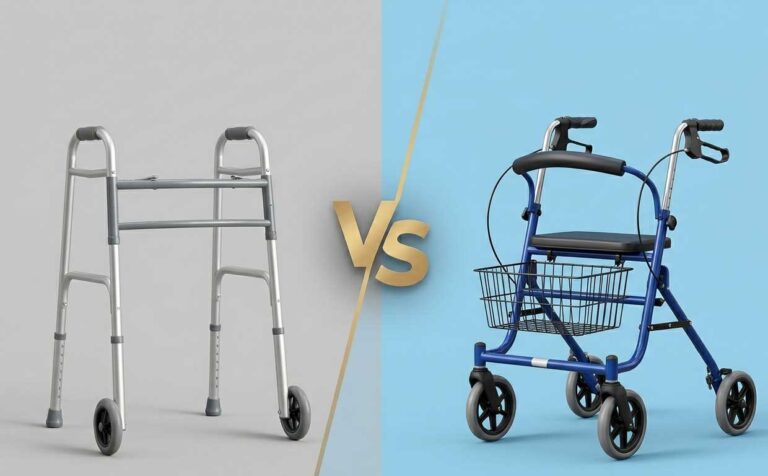
Choosing between a walker and a rollator can feel more confusing than it should be. Both are designed to help with mobility, but they are not interchangeable. The safer choice depends on how steady the person is, how much support they need, how they move around the home, and whether they can manage features like hand brakes and a seat safely.
A lot of families make the mistake of assuming a rollator is automatically better because it looks more modern and moves more smoothly. That is not always true. For some seniors, a rollator improves daily movement. For others, it is the wrong tool and can actually feel less stable than a standard walker.
This guide breaks down the real differences between walkers and rollators, who each one may suit best, and how to think about the decision without guessing.
Quick answer: A standard walker is often better for seniors who need more direct stability and support. A rollator is often better for seniors who walk more independently, can manage brakes safely, and benefit from smoother movement plus a seat for breaks.
The short version before we get into the details
A walker usually offers more direct support and is often better when balance is more clearly affected.
A rollator usually moves more smoothly and can feel more convenient, but it requires more control, especially with brakes, turning, and seat use.
The wrong choice usually happens when people focus on appearance or convenience first instead of stability, control, and the person’s actual walking pattern.
Walker vs rollator: what changes in real life
What a standard walker does
A standard walker is built to provide firmer support. It usually has a simpler frame, no seat, and either no wheels or two front wheels depending on the model. It is often the better choice when the person needs more confidence, more steadiness, and more direct weight support while walking.
What a rollator does
A rollator has four wheels, hand brakes, and usually a built-in seat. It is designed for smoother movement and more convenience, especially for seniors who can still walk fairly independently but want support and occasional rest breaks.
Why people confuse them
Both help with mobility, but they solve slightly different problems. A walker is more about support and stability. A rollator is more about smoother movement and convenience. That difference matters more than most families realize.
| Feature | Walker | Rollator |
|---|---|---|
| Primary strength | More direct support and stability | Smoother movement and convenience |
| Wheels | Usually none or front wheels only | Four wheels |
| Brakes | Usually none | Hand brakes required |
| Seat | No | Usually yes |
| Best for | More noticeable balance problems | More independent walkers needing support |
| Main downside | Slower and less convenient | Can be less stable for the wrong user |
A walker is often the smarter choice when support matters most
A standard walker is often better when the person clearly needs more stability and does not move confidently enough to handle a rollator safely.
- They hold onto furniture or walls while walking
- They look unsteady during turns or transitions
- They have had recent falls or near-falls
- They need more direct weight support
- They would struggle to manage hand brakes safely
- They move more cautiously and need stability more than speed
If the real problem is balance and confidence, a walker is often the safer answer. Our Signs Your Parent May Need a Walker guide can help you think through those warning signs more clearly.
A rollator is often better when the person still walks fairly independently
A rollator is often the better fit when the person can still walk on their own fairly well, but benefits from support, smoother movement, and a place to sit when tired.
- They walk independently but tire more easily
- They need support over longer distances
- They want a seat for occasional rest breaks
- They can safely squeeze and manage the brakes
- They do not need the firmer support of a standard walker
- They want something easier to push during everyday outings
A rollator can be a strong choice for the right user, but it is a mistake to treat it like an upgrade that automatically works better for everyone.
Do not choose a rollator just because it looks easier
This is where families get sloppy. A rollator looks smoother, more comfortable, and less clinical than a walker. That does not mean it is the safer choice.
If the senior is already unsteady, weak during turning, or not able to control the brakes properly, a rollator can create more risk than a simpler standard walker.
Where the walker will be used matters
Indoor use
For tighter indoor spaces, a standard walker often feels steadier and more predictable. A rollator can feel bulky in narrow hallways, small bedrooms, or crowded living areas.
Outdoor use
A rollator often makes more sense for outdoor use, especially if the person walks farther, needs smoother movement, or wants a seat during errands or appointments.
Why this matters
Some seniors may actually benefit from support that is ideal for home use first, not something that looks more convenient for occasional outings. Home safety usually matters more than appearances.
Ask these questions before choosing
- Does the person need more stability or more convenience?
- Can they safely manage hand brakes?
- Do they struggle more indoors or outdoors?
- Are recent falls or near-falls part of the picture?
- Do they need direct support when standing and turning?
- Would a seat actually help, or would it just look appealing?
If you are still unsure, our Best Walkers for Seniors guide can help you compare safer options based on support needs, comfort, and daily use.
What families often get wrong
Assuming a rollator is automatically better
It is not. It is only better for the right kind of user.
Ignoring brake control
If the person cannot reliably squeeze and manage hand brakes, that is a real safety issue.
Choosing based on appearance
A rollator may look more modern, but stability matters more than aesthetics.
Ignoring home layout
A bulky rollator in a tight house can become more frustrating than helpful.
Thinking the aid alone solves everything
Sometimes the person also needs better lighting, fewer trip hazards, and safer bathroom support. Use the Senior Home Safety Checklist to catch the problems that mobility aids alone will not fix.
Some situations need more than a product choice
Extra guidance matters more if the older adult has:
- Multiple recent falls
- Rapidly worsening mobility
- Weakness on one side
- Dizziness or symptoms affecting balance
- Confusion about how to use support equipment safely
In those situations, the right question is not just “walker or rollator?” The bigger question is whether the person’s mobility needs have changed enough to require more structured support and home safety changes.
Need help choosing the right mobility support?
Compare practical walker options and learn which setups make the most sense for stability, comfort, and real daily use.
Common Questions About Walkers and Rollators for Seniors
Clear answers to the questions families usually ask before choosing between the two.
Often, yes, when the person needs more direct support and stability. A walker is usually the safer choice for someone who is clearly unsteady, cautious, or unable to manage hand brakes well. A rollator can be safer for someone who still walks fairly independently and benefits from smoother movement plus a seat.
A rollator is often better for seniors who can still walk on their own reasonably well, need help over longer distances, can use the brakes safely, and would benefit from having a seat for rest breaks.
A walker usually provides firmer support and feels more stable for someone whose balance is more affected. It is often better when the person needs support first and convenience second.
Yes. If the senior is too unsteady, cannot manage the brakes well, or does not have enough control during turning and stopping, a rollator can feel less secure than a standard walker.
Start by looking at how steady your parent really is, whether they are having falls or near-falls, whether they use furniture for support, and whether they could safely manage brakes. The decision should be based on real walking ability, not on what looks better.
The better choice is the one that matches the real mobility problem
The best mobility aid is not the one that looks nicer or sounds more advanced. It is the one that helps the person move more safely and more confidently in real daily life.
If the senior needs more direct stability, a walker is often the better fit. If they still walk fairly independently and need smoother movement plus a seat, a rollator may make more sense. The important part is choosing based on actual support needs, not wishful thinking.

Claire Bennett is the Senior Home Safety Researcher and Editor at ElderlyTend. She writes practical guides that help older adults, caregivers, and families make safer decisions at home. Her work focuses on mobility aids, fall prevention, bathroom safety, bedroom safety, and aging-in-place support.
At ElderlyTend, Claire reviews product categories and home safety topics with a strong focus on real-life usability, comfort, safety, and everyday practicality. Her goal is to make senior care decisions easier to understand without the confusing language, exaggerated claims, or low-value advice that often fills the internet.